Photo Stitch Poppy: A Designer’s Review for Branded Merchandise
First Impressions for Business Identity
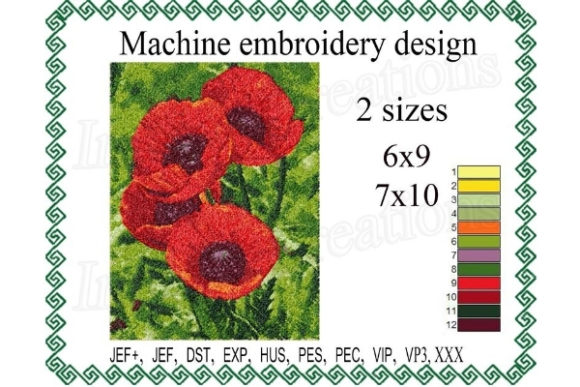
The Photo Stitch Poppy embroidery file presents itself as a classic, nature-inspired motif. The title and description suggest a design that leans elegant and handmade, rather than purely playful or starkly modern. For a small business, this initial feeling is crucial. A café, bakery, florist, or boutique can leverage this to convey a sense of warmth, craftsmanship, and natural authenticity. It feels professional enough for a staff uniform yet retains a friendly, decorative charm perfect for customer-facing merchandise.
Evaluating Real-World Business Applications
As an embroidery designer reviewing this for commercial use, I immediately consider its application across typical small business assets. The design’s category, Bouquets, hints at a floral focus, making it a natural fit for certain brands.
Uniforms, Aprons, and Professional Wear
For a small café or creative studio, Photo Stitch Poppy could serve as a beautiful chest logo accent or sleeve detail on staff polo shirts or apron embroidery. It adds a premium, personalized touch that elevates standard work apparel. On a baker or florist’s apron, it reinforces the brand’s thematic connection to natural, crafted products.
Patches, Caps, and Tote Bags
The potential for a custom embroidered patch is significant. A pet brand or handmade shop could use this patch on tote bags as a brand mark, or on product packaging as an accent label. For cap embroidery, the design’s likely density and detail need careful evaluation for the curved, smaller surface of a cap front. A successful tote bag design using this file would instantly create a desirable, reusable customer gift or event merch.
Product Labels and Etsy Branding
For Etsy sellers and craft businesses, Photo Stitch Poppy could be embroidered directly onto a product, like a linen napkin or pouch, acting as a subtle brand signature. It enhances the handmade product presentation, boosting perceived value and visual consistency across a line.
Where to Exercise Caution in Production
Not every machine embroidery design performs perfectly in all scenarios. Based on its description as a “high-quality embroidery,” certain applications require pre-production testing.
- Small Patch Sizes: If you need a very small patch for a product label, test the design at that reduced size first. Detailed outlines may become lost.
- Curved Surfaces & Caps: The stitch density and potential detail might cause issues on curved surfaces like cap fronts. Proper stabilizer and fabric choice are critical.
- Dark Uniforms & Fabric Texture: Thread color contrast is key. Test on the actual dark uniform fabric to ensure the poppy’s colors remain vibrant and legible.
- Items for Frequent Washing: For work shirts or aprons that undergo heavy laundering, a robust stitch structure is needed. Always test on real fabric under realistic conditions.
The Impact on Brand Identity and Customer Trust
Incorporating Photo Stitch Poppy into your small business merch isn’t just decoration; it’s a strategic design decision. A well-executed embroidered logo or accent builds customer trust and professionalism. It signals attention to detail and investment in quality. For a local business, this fosters recognition and elevates the product value of custom apparel or promotional items. It creates a cohesive brand identity that feels tangible and authentic, directly enhancing buyer engagement.
Practical Designer Notes Before You Stitch
Before running this digital embroidery file for a commercial embroidery project, follow these steps to ensure success and protect your business.
- Test in Black and White: Create a simple mockup to see how the design reads without color. This helps assess its fundamental shape and impact.
- Check Hoop Size & Stabilizer: Confirm the required hoop size and use the correct stabilizer for your target fabric, especially for textured materials like tote bag canvas or apron twill.
- Review Thread Color Contrast: Analyze the suggested thread colors against your actual garment colors. Adjust if necessary for maximum visibility.
- Inspect Spacing and Density: Look closely at the design’s spacing and stitch density. High density on lightweight fabrics can cause puckering.
- Create a Printable Mockup for Client Approval: If you’re producing for a client’s brand, always provide a visual mockup for approval before stitching the final product.
- Compare Beside Other Design Assets: Place a stitched sample beside your other branding elements (logos, fonts) to ensure visual harmony.
- Confirm Commercial Licensing: The description states it’s ready for your sewing project, but for unambiguous business use, verify the licensing terms of the embroidery file before production.
Final Thoughts for Merchandise Creators
The Photo Stitch Poppy offers a versatile, aesthetically pleasing option for businesses wanting to infuse their merchandise with a natural, crafted feel. Its success hinges on thoughtful application and rigorous testing. For apparel decorators and product designers, it represents a quality design asset that can translate into a beautiful finished product—from a boutique’s staff uniform to an Etsy seller’s branded patch. By focusing on its business value beyond mere decoration, you can leverage this embroidery design to strengthen your brand’s story and connect more deeply with your community.