A Designer's Look at Kajuru Castle - Kaduna Bluework
When a new embroidery design lands in your library, the real question isn't just what it looks like on screen. It's what it feels like when stitched out, how it sits on fabric, and what kind of story it tells on a finished product. Today, I'm thinking through Kajuru Castle - Kaduna Bluework from that exact perspective—as a project-ready asset, not just a digital file.
The Immediate Mood and Visual Personality
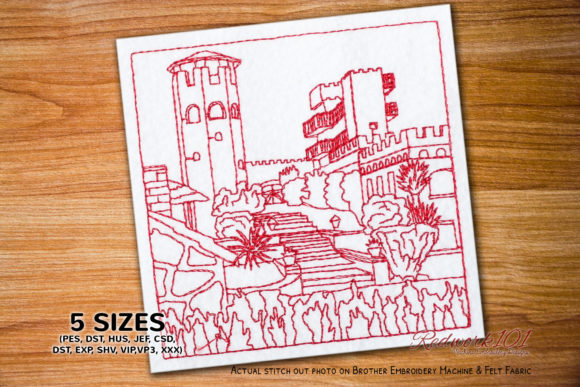
The first thing that strikes you is its distinct architectural character. It's not a generic castle; it’s a specific, modern luxury villa with clean lines and a structured presence. The bluework aspect suggests a monochromatic or limited-color approach, which immediately gives it a classic, almost heritage feel. This isn't a loud, colorful novelty design. It carries a mood of stability, sophistication, and a touch of travel intrigue. For designers and makers, that means it naturally aligns with products that value subtlety and narrative—think gifts for history buffs, personalized items for someone with a connection to Kaduna or Nigeria, or boutique merchandise aiming for an cultured aesthetic.
The layout, with the central castle and the optional surrounding box stitch, offers flexibility. The note that the box color differs "in most" tells me this design likely uses color stops, allowing you to easily change that outer frame’s hue. This is a practical touch for customization.
Where This Design Finds Its Home
Let’s walk through a real scenario. Imagine you’re preparing a custom embroidered tote bag for a small shop focusing on unique travel-themed goods. Kajuru Castle - Kaduna Bluework wouldn’t be a mere decoration; it would be a conversation piece. The clean lines and architectural detail would stitch out crisply on the bag’s canvas, offering a premium, handmade presentation. Similarly, on a linen pillow cover in a home decor line, it would act as a sophisticated accent, far from a childish motif.
Its application range is thoughtful. It would work well on:
- Custom apparel like polo shirts or denim jackets where a less whimsical, more grounded design is needed.
- Heavy sweatshirts or caps, provided the stitch density is suitable for the curved surface.
- Embroidered patches for collectors or as standalone products, given its defined borders.
- Kitchen towels or aprons in a high-end culinary boutique might use it to signal a theme of ‘castle tours’ or ‘global cuisine.’
- Personalized gifts, like a framed embroidered art piece for a wedding gift if the couple has a relevant connection.
The key is matching the design’s inherent mood—architectural, specific, serene—with a product that enhances that story. It likely wouldn’t fit on a whimsical baby blanket, but it could be perfect on a nursery decor item if the parents are architects or avid travelers.
Performance Notes for Real Stitching
This is where the designer’s eye shifts to the practical. Architectural designs like this one, with straight lines and potential corners, demand attention to fabric texture and stabilizer. On a thin or stretchy fabric, those crisp lines could distort. Always test on a scrap first. The mention of an optional box stitch also hints at detail level; you’ll want to inspect the stitch file to see how dense the fill stitches are in the castle itself and whether the running stitch outlines are delicate.
For visual clarity and customer trust in your finished product, this design rewards proper execution. Stitched neatly on a medium-weight fabric with good thread contrast, it looks professional and valuable. On a dark fabric background, ensure your chosen blue has enough pop. I’d recommend creating both light and dark background mockups to preview this before committing thread.
Caution Zones and Careful Application
Some applications require a second thought. If you’re considering very small hoop sizes, the architectural details might become too compressed, losing clarity. Similarly, on highly textured fabrics like loose knits, the finer details could get lost. The design’s personality relies on its clean form, so preserving that is key.
For products needing frequent washing, like apparel or kitchen towels, a robust stitch density and durable thread will ensure Kajuru Castle - Kaduna Bluework holds its integrity over time, maintaining that handmade presentation you’ve invested in.
Impact on Your Business and Craft
From a commercial perspective, this design offers niche appeal. For an Etsy seller or small shop product line, it can help you stand out from generic floral or animal motifs. It adds a layer of brand consistency if your shop focuses on architectural, geographical, or cultural themes. As a digital embroidery file itself, it’s a solid design asset for those selling to other makers interested in unique subjects.
The giftability is high for the right recipient. It feels intentional and researched, not random. That builds buyer engagement—a customer looking for something specific related to Africa, castles, or modern villas might find this exactly what they didn’t know they wanted.
Your Pre-Stitch Checklist
Before loading this file for a client project or your next craft fair product, run through these quick, professional habits:
- Stitch a test sample on your intended fabric type with your chosen stabilizer.
- Check the thread color contrast against your final product background.
- Review the actual stitch density in your software—is it suitable for your target fabric (e.g., a thick towel versus a fine linen)?
- Confirm the effective hoop size needed for the detail level you want to preserve.
- Inspect the small details, like window outlines or the box stitch corners, in the stitch preview.
- If selling finished items, always confirm the licensing terms for the embroidery file for commercial use.
Since the product description doesn’t specify exact stitch counts, file formats, or license details, verifying those from the source is a necessary step. It’s this due diligence that turns a good digital design into a great, reliable embroidery project.
In the end, Kajuru Castle - Kaduna Bluework is a design with a clear point of view. It won’t be for every project, but when its mood—that blend of modern architecture and classic bluework—aligns with your product’s story, it stitches out into something distinctly valuable. It reminds us that in machine embroidery, the best designs are those that carry their own world into the thread.