Stitching Success: The Opera House Sydney Embroidery Design Review
As an embroidery designer preparing for a weekend craft fair, every design choice is a business decision. When reviewing a machine embroidery design like Opera House Sydney, Australia, I’m looking beyond the digital file. I’m visualizing it on a crowded booth table, considering which product it will elevate, and predicting how a customer will react upon seeing it stitched into fabric. Let’s walk through that real-world evaluation.
The Immediate Mood and Market Appeal
The Opera House Sydney, Australia design inherently carries a sense of elegance and international recognition. It isn’t cute or rustic; it’s decorative and premium. This gives it a distinct niche in a booth filled with more generic motifs. For customers, it instantly communicates travel, culture, and sophistication. It appeals to the souvenir-seeker, the Australia enthusiast, or someone simply drawn to iconic architecture. This strong thematic identity is its greatest selling asset, allowing it to stand out in a sea of floral patterns and humorous quotes.
Product Placement: Where This Design Shines
Not every design works on every product. Here’s how I see Opera House Sydney, Australia performing across typical craft fair items.
Top Tier: Statement Pieces and Gifts
Pillow covers and tote bags are the perfect canvas. The design can be scaled to become a beautiful focal point, transforming these items into decorative statement pieces. An elegantly embroidered pillow cover feels like a boutique home décor item. A tote bag with this design becomes a unique, giftable accessory. Tea towels and aprons also work well, leaning into a kitchen product with a global twist. They move from simple utilitarian items to conversation-starting gifts.
Secondary Tier: Accents and Accessories
Embroidered patches are a fantastic option, especially for a design with such clear iconic value. They can be sold as standalone items or applied to jackets and bags. Small fabric pouches or caps can also succeed, but scale becomes critical here. On a curved cap surface or a small pouch, the design must be sized appropriately to retain clarity. It works best as a centered accent rather than a tiny, detailed repeat.
Considerations for Booth Display
For your actual craft fair table, create at least one real, high-quality mockup on a premium product—like a crisp pillow cover or a sturdy canvas tote. This sample will demonstrate the handmade quality and visual impact far better than a digital mockup. Place it prominently. Its sophisticated vibe can elevate the perceived value of your entire booth.
Practical Production Insights for the Maker
Turning this digital embroidery file into a profitable handmade product requires attention to production details.
Understanding Scale and Clarity
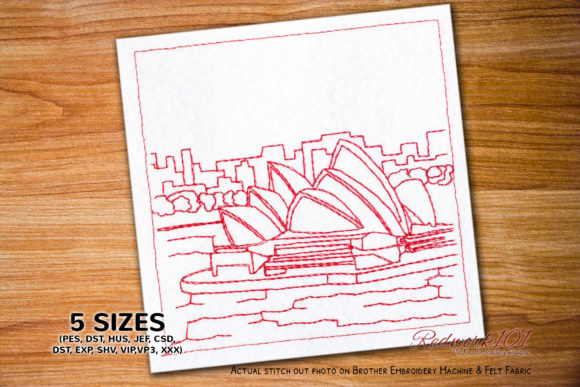
The architectural nature of the Opera House Sydney design means it likely contains lines and shapes that define its famous silhouette. Stitch density and small details are key considerations. Before batch production, test the design on scrap fabric at the intended hoop size for your chosen product. Inspect whether intricate sections lose clarity when stitched small, especially on textured fabrics like tea towels or dark-colored backgrounds where thread contrast is vital. It may perform best as a medium-to-large design where its elegance is fully realized.
Fabric and Stabilizer Strategy
This design leans towards a clean, crisp finish. Using the right stabilizer for your base fabric—whether it’s linen for a pillow, canvas for a tote, or cotton for a towel—is non-negotiable to preserve those defined lines. For commercial embroidery on items like caps, be extra mindful of the curved surface and potentially thicker fabric; a test run is essential.
The "Box Stitch" Note
The product description mentions an optional box stitch with a potentially different color. This is a valuable feature. On a plain apron or tea towel, a contrasting box can frame the design beautifully, adding a pop of color and a finished border. It increases versatility. However, for a more minimal, premium look on a pillow or tote, you might opt to omit it. This choice allows you to tailor the final product’s mood.
Selling and Photography: Capturing Customer Attention
At the fair, customers notice texture and craftsmanship. The physical stitch work of this design, if executed well, will attract touch and closer inspection. For your online presence, like Etsy listings, photography is paramount. Ensure your photos clearly show the stitch detail and the quality of the finish. Shoot the product in a setting that complements its elegant vibe—perhaps with simple, clean backgrounds. A printable mockup is useful for digital sellers, but a photo of the real embroidered product will always sell better.
Batch Production and Brand Consistency
For a small shop product, is this design repeatable? Given its strong thematic identity, it can become a signature piece in a "Travel" or "Architecture" collection within your brand. Batch-producing a series of pillow covers or tote bags is practical, as the design’s appeal is consistent and not trend-dependent. Always confirm commercial licensing for your digital embroidery file before selling finished products to ensure your business is protected.
Final Designer Verdict for the Craft Fair
The Opera House Sydney, Australia embroidery design is a valuable niche asset for creative entrepreneurs. It won’t be your highest-volume, everyday seller, but it serves as a premium product that enhances your booth’s diversity and perceived craftsmanship. It attracts a specific customer, often at a higher price point, and translates beautifully onto giftable, statement items like pillow covers and totes. By carefully managing its scale, fabric choice, and stitch execution, you can create a series of handmade products that are both beautiful to make and profitable to sell. Your final step: hoop it up, stitch it out on your chosen fabric, and see that iconic silhouette come to life in thread—that’s the moment you’ll know exactly where it belongs on your table.